

If you’re tuning back into Spice on the Beat after a while, let me catch you up. May is Asian American History Month, and to celebrate my heritage, I’m highlighting some of my Asian artist friends here in the city of Brotherly Love. We began the series with alt-R&B singer and multi-instrumentalist SANTRISTÁN, who absolutely crushed the stage at Warehouse on Watts. If you haven’t had a chance to check out his post or the work he is doing, you can read about him and listen to his interview here.
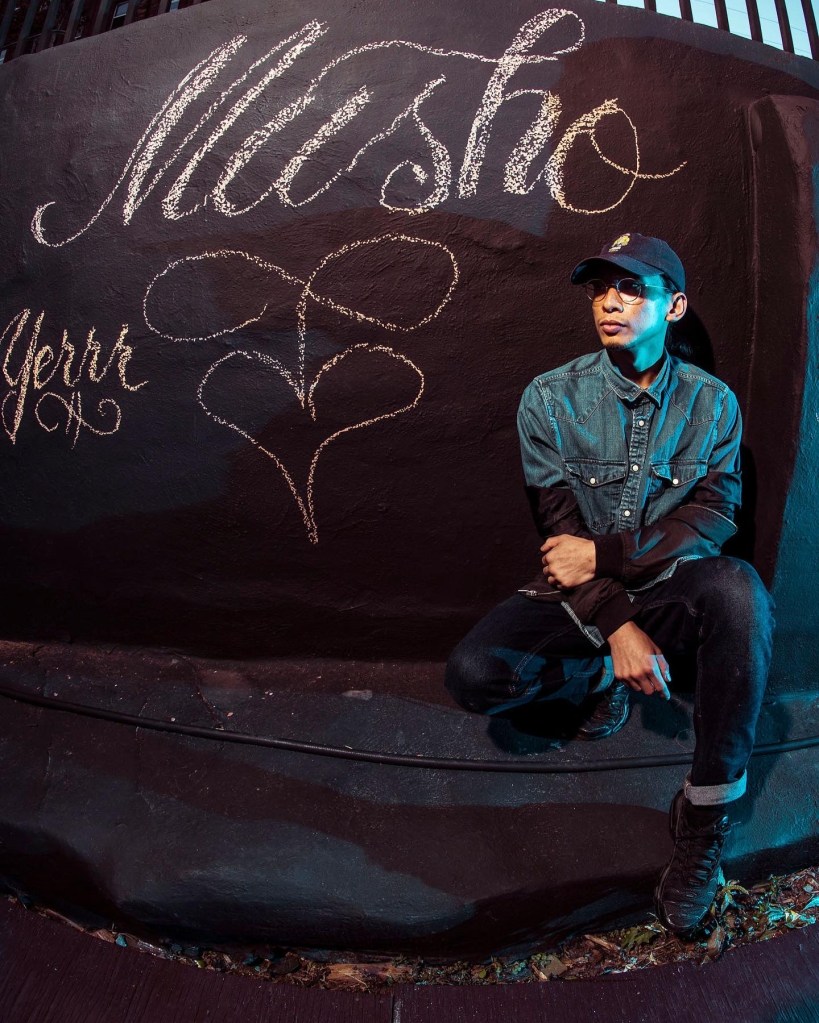
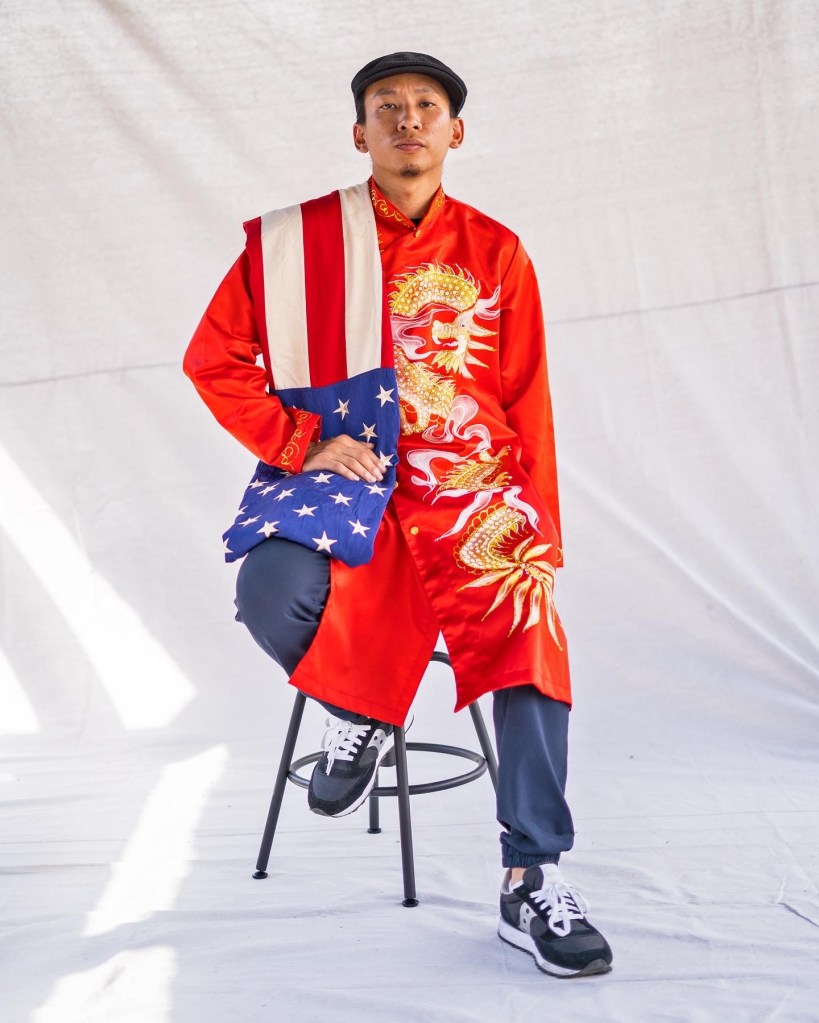
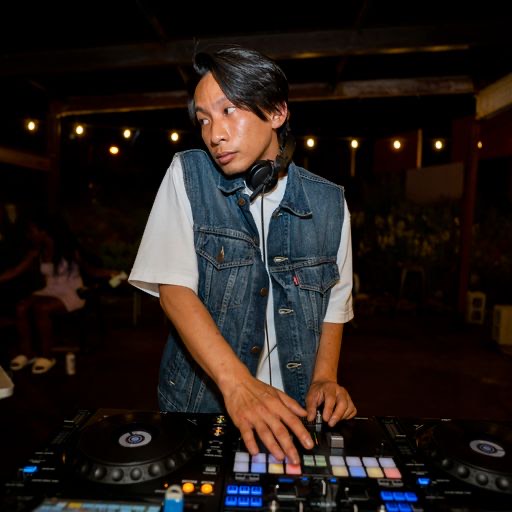
This week, we’re changing our tune with Vietnamese-American DJ, Truc ‘Musho’ Trinh. Truc’s journey is a testament to the transformative power of music and finding one’s self through the power of song. Originally from Atlantic City, New Jersey, he brought his talents over to Philadelphia, where he honed his skills in the arts, starting out as a Bboy/Breakdancer. His passion for dance led him to develop a unique musicality and rhythm, which eventually guided him to the decks, opening up a whole new world of music as a DJ.
While breaking helped Truc navigate the waters of Hip-Hop culture, his knowledge of music expanded far beyond that. He delved into the obscurities of Baile Funk, Garage, and other niche genres, incorporating them into his popular sounds of Jersey Club, Baltimore Club, and Club music. Truc has also been vocal about his role in the Philadelphia music scene, proudly representing the city as a young, Asian American creative. He incorporates sounds of city pop and other similar genres while also providing education about prominent Asian musicians, thereby raising awareness of the growing music industries in Asian countries overseas.
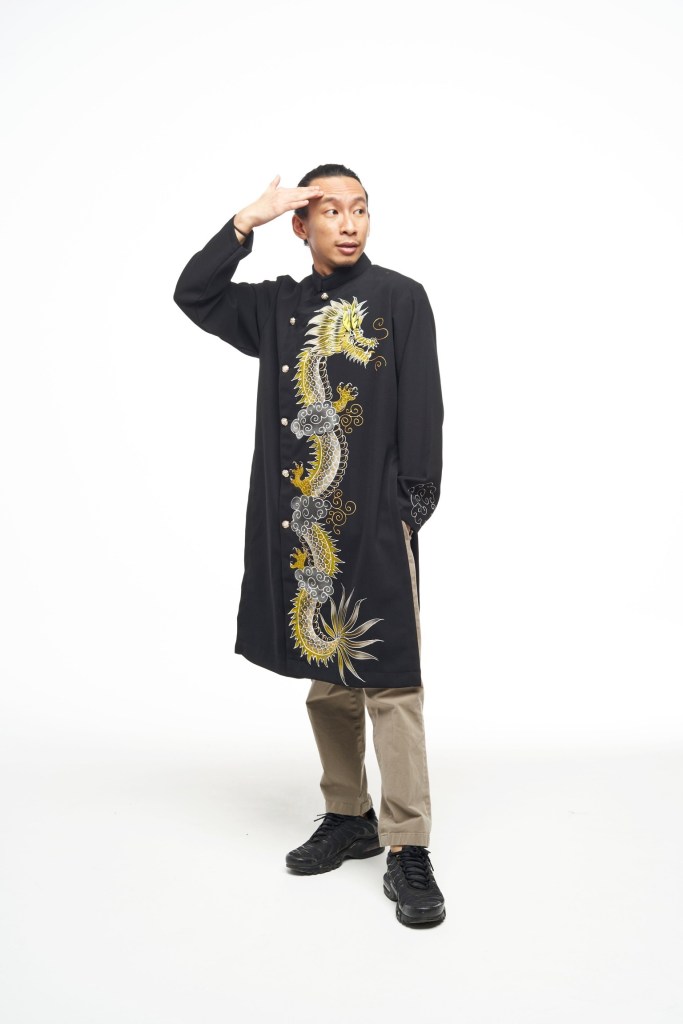
The Philly DJ is also Co-Founder of Club Crusades, a musical collective that showcases and celebrates dance music. Through the organization, Truc curates and organizes events and parties in Philadelphia that highlight its growing dance music scene, enabling him to share his passion for funky beats and grooves with his friends. You can also now catch him spinning between Philadelphia and Atlantic City while showing off his impressive vinyl collection, which spans more genres and countries than you could imagine.
Musho is participating in and curating several events to celebrate Asian American History Month. You can find him at Blind Barber on Thursday, May 16th for Mmmm So Good… as well as at the Silk Road Marketplace on May 31st. Follow him on Instagram to see what else he has planned for the month! In the meantime, until you can make it out to one of Truc’s events, you can catch our vulnerable, intimate, and genuine interview down below, where Truc outlines navigating identity and how the Philly music scene helped to do so.
Hi everyone, I am back with my second artist for our Asian American History Month segment. So, if you didn’t tune in to our first event that we had with SANTRISTÁN, who is an alternative R&B rock artist here out of West Philly, definitely go check that out. He is an incredible multi-instrumentalist. Today, we are going to be talking with one of my favorite DJs here in Philadelphia. Some of you may know him as Musho, but you can catch him in the vinyl scene, working with quite a few different genres. So here we are. Go ahead and tell us a little bit about who you are, what you do.
Musho: “How’s it going, y’all? My name is Truc Trinh on my ID, and the world knows me as Musho. I started off as a b-boy. When I was about 13 years old, and I guess that was my gateway into the hip-hop culture, where I inevitably found myself into DJing and chose this path.
I’m a first generation Vietnamese New Jerseyan, the best way I could describe myself. I know that’s a mouthful, but it pretty much sums everything up. You know, b-boy, advocate of the arts. I guess trying to be an outstanding community member, trying to, you know, be a good servant to my community. And just be an all-around good person, and I don’t know, a goofball.”
So I think my first question always is, how did your family respond to you wanting to pursue the arts and music specifically full-time?
Musho: “I was scoffed at it. Literally. I have Vietnamese-ass parents. How does the language get in?”
Oh, curse as much as you want. I curse all the time.
Musho: “Yeah, my household is Vietnamese as fuck. Like, before I moved to Philly, I spent a lot of time in Philly going back and forth to play little oddball gigs here and there. One of the first parties I did was over at the Barbary, and then I got a residency at the Saint, so I was going between Philly and AC, just hopping on that bus or train back and forth, or jus crashing at my homie’s crib, where inevitably I ended up moving into that house.
Yeah, I told my mom one day, I’m moving to Philly to do DJ stuff, and she gave me the most disdainful look, like, you’re crazy, what are you doing? And it just was not a great reaction. Left the crib with two garbage bags, a crummy controller, and a laptop, and ever since then, it’s been history.”
So what exactly brought you over to Philly in comparison to continuing your career over there? Were there just not as many opportunities?
Musho: “Well, it’s a combination of things. I’ve romanticized Philly since I was about 15, 14, my breakdance years.
I got into a crew, got into the practices. I would be in Philly all the time, and it’s where I felt super, like, these is my people. During the time of me exploring breakdancing, I was living in Doylestown, Bucks County, where I was one out of 10 Asians in my graduating class. Nobody else breakdanced. Everyone was on a different type time than me. So I definitely felt like an outsider with being this breakdancing, hip-hop kid, and liking different things, and being outcasted in certain ways, and also just being treated different because I was Asian, which is, you know, a recurring thing when you’re a token in the suburbs. Yeah, the opportunity was just a lot better. Philly’s just an all-around richer city.
I felt comfortable, there was just more activity going on. There’s breakdancing events, there’s art events which I got involved with, and stuff like that didn’t really exist in Atlantic City. Because Atlantic City is such a tourism city, it’s hard for any type of culture to really thrive when everyone either works service industry or in the casinos. That itself is its own culture, where the lifestyle of that doesn’t all grow for anywhere else except people just recycling the same money over and over in the different casinos and restaurants.
So Philly just ended up being where I landed. It just had everything I could possibly need. Diverse community, rich history in the arts, accessibility, and a place where you can find accessible music, accessible DJs. So it becomes a hub for that type of stuff, versus where Atlantic City isn’t really a city, and Doylestown is just Doylestown, where it’s just white, suburbia America, where I just feel like a fish out of water there. And Philly just felt like home. Honestly, Philly feels more home to me than Atlantic City does, because I have a strange relationship of bouncing between Atlantic City and Doylestown, to where in high school and middle school years of Atlantic City, I didn’t know anybody. I only knew my childhood friends.
So all the friends that I made through my adolescence of being in Philly, those are the people I still dance and practice with, the people I still see out. I’ll pull up to a party, and I see them, and it’s like, yo, I’ve known you for half my lifetime.”
Did you find that when you entered the music scene here in Philadelphia, was there that camaraderie with other Asian Americans also doing something similar within the music scene, or was there more of a competitive nature? Was that not there at all, and did you really need it to be there?
Musho: “Competitive nature didn’t really exist to me. I was just existing and doing my thing.
At the time, when I first came out here, I didn’t know that many other DJs, except at the time, it was like, what, Dirty South Joe, Guns Garcia, Yolo Ono. Later on, I met people like KB, Kevin Kong, Dave Mass, and everyone just kind of did their own thing, which was super cool. Everyone was just existing, and we could all coexist amongst each other. I didn’t feel any type of saltiness about anything. There wasn’t really much of a camaraderie. There was never a, hey, this is an Asian-forward event or anything. We were just doing. If I were to play with any of the people I just mentioned it was just us playing a party together.”
And how would you say, or would you say, that there was any impact from your culture on the music that you’re playing in the clubs? Is there a big impact or influence on your vinyl collection?
Musho: “I wouldn’t necessarily say my culture affects my music taste or, like, my vinyl or anything like that, but it did take a certain trip where I was 22, 23 when I went back to Vietnam as an adult versus a teenager where when you’re a teenager, you’re a shithead kid, and you just want to sit on chat rooms.
And then when I go as an adult, and I’m really watching life pass me by, I recognize how beautiful it is. And then on a Bah Humbug, I met a mutual friend of my roommate’s who lives in Philly. He’s originally from San Fran on the West Coast. He told me to link up with him when my cousin was, like, oh, my cousin from America is visiting. Let me go find what he likes. My cousin was on Facebook, finds DJ events for me to pull up to. He’s, like, we can go do something. I’m, like, whatever you want to do. He’s like, you like DJ stuff?We’ll find DJ stuff. So he pulls up an event, and then crazy enough that my roommate’s friend at the time sent me that same event. And I’m, like, okay, so I guess this is something I should go to since there’s already some type of connection there.
And I go there, and I check it out. They got what we got. They got bass music and trap music. House music and hip hop and all these different things. One of my reference points was, like, cheesy, over-the-top big room Vietnamese house music. But the dude that I linked up with there is now a big bro where he was a pioneer of the scene after he spent 10 years in Vietnam to get in touch with everything. B
He’s known to be a big trailblazer of his own. He’s Dan Nguyen, Demon Slayer. Super dope guy. Was the only guy doing electronic music or bass music stuff in Vietnam at the time with this other guy, Jason, who I think is from, I don’t want to misquote it, but he’s from elsewhere. I think Australia.
Those were the only two dudes that were the first, I guess, that I know of on that wave. And as time progresses, this stuff became more accessible on the internet and it’s a wave and generation of other aspiring DJs and producers doing really cool stuff. So then, you know, I return back to America heavily inspired. I’m like, this is so dope that this exists. Super, super cool to see what I like, exist over there. And then I go back a couple years later and it’s even more accessible. And honestly because Ho Chi Minh, Saigon is a massive city. Like, it’s a massive, massive city. There’s going to be a lot of stuff going on to where now, stuff that I like is more accessible here than in America. There’s crews doing club music events, dubstep events, drum and bass events. One night I got to satiate different pockets of my musical palette where one spot’s, like, rap, hip-hop, trap and bass. The other spot is, like, French house music and groovy stuff. Go to another spot, it’s, like, acid rave, breaks, drum and bass. And I’m just, like, this is crazy and kind of overstimulating. I’m here for it. But to see the scene thrive and- honestly, I feel like they’re doing it better than America is, in my opinion. Based on my reference point of what dope is. Because I know everyone has different opinions of it.
But as far as not even just music, subculture in Vietnam is booming. Because there’s a crazy statistic where it’s a massive majority of youth culture versus the elderlies. The population for 30-year-olds and younger heavily skews versus, like, the 30 and up. So you have a lot of youthful energy just trying to occupy their time and get into stuff. And I’ll see clips and videos of festivals over there and these insane productions of just crazy LED walls and weird rigs and stage rigs. But also they get crazy, crazy touring acts over there. And it’s just super cool to see that exist when it’s I know that my home country had to deal with, like colonialism and communism and being war-torn. And all these different things. So, to see what’s happening right now is kind of, like, I don’t know. I wasn’t around for the Renaissance, but it feels like a Renaissance. I wasn’t there during the Renaissance. But I definitely see a shift in the culture versus when I was there as a 16-year-old, a 10-year-old, a 4-year-old. So the development’s just been super crazy. And it’s just, like, I just try to think about how did that even happen? You know, it just takes one person to care. So, I just try to apply that to where I’m at. Just teach someone how to care so they can just infect everyone with positivity and how to nurture something.”
Do you feel that Philly still has that same feeling as well since you first started here? Do you feel like it’s gotten more so? Has it gotten worse?
Musho: “Honestly, I feel like COVID fucked everything up. Basically, COVID really messed up, I guess, the regular program. It caused some people to quit. It caused some people to rethink their decisions.
I mean, nowadays, for me, generally speaking, I don’t see much stuff that interests me, which is kind of like Jersey, Baltimore Club, house music, Baile Funk. I mean, Philly has a lot of house music. But, you know, there’s a lot of filler stuff, in my opinion. But that’s just me.
Of course you have your Staple Sundae, which is the goated Philly party, in my opinion, which is still going on strong. 21 years plus. Shout out Lee Jones. Love them to death. You know, what they do feels like home to me. What I pull up to when I go to Sundae just feels family. It feels like comfort. And there’s not that much stuff like that other than, you know, the Homie Matt Law has Laws Layer now after he did Friends and Fam. And it’s like between those two, those three functions, is, like, where I want to be at. And it doesn’t really exist. It happens every so often. A lot of the other stuff just doesn’t really interest me.
And I see a lot of theme parties because, you know, a homie told me that post-COVID, people aren’t too keen on exploring different music. They just want to go to theme parties because it’s something they trust. There’s something they’re familiar with, which is a really interesting and very valid perspective. I see little crews. I don’t want to say little, like belittling them, but, I see new crews showing up, doing crazy stuff and moving real fast. Moving a lot faster than when I first started out, which is super cool seeing. Because I want to see where the ceiling goes. I like seeing how fast someone can climb a paying dues ladder and learn their lessons because it’s a very necessary thing while being in Philly.
You got to make your mistakes and navigate and goof off here and there to figure out how you could be the better version of yourself. And I like seeing what’s been unfolding so far. But, you know, everything has its other ends of it. There’s other things that I don’t like. There’s a lot of things I don’t like. I’ll be completely honest. And I try not to focus on that. And focus on the cool things that exist. Cool spaces are opening up to where I can cater to the cool, posh, trendy thing that might interest me. I don’t know. I’ll give it a shot. But there’s more sports bars. I’m not too keen on that. Shout out to people that like that stuff. But more and more of those open up. So, there’s less real estate for cool things that interest me.”
Do you think that you could ever see yourself taking your DJ skills over to Vietnam? Would you?
Musho: “I got to play over there. It was amazing.”
Oh, tell us about that. What was the difference for you? Would you say the difference was more so in the energy?
Musho: “I guess the scene. The scene in the social group that I was involved with. Because the dude that I linked up with over there, Minoto, he’s from Berlin, actually. And he did an internship in Vietnam. And he stayed there. He’s like, yo, there’s work to be done. And to see what he does, you know, now he has a whole media company. I don’t know what to title it. But the Instagram B2X magazine or whatever, where they just have blurbs about all the different genres. And whether it be grime, dubstep, baila funk, exploring that rage rap, stuff with, like, XXXTentacion.
The weird pockets in subgenres of all these genres that we know, they would have these Vietnamese write-ups of it and slideshows with artists. And really trying to educate the different scenes. And highlight the different scenes. But they also have a DJ and producer academy. And it’s so ill that this exists. And to where people involved with the academy are partial club owners and they have a graduation ball. So it’s a whole experience of training this new wave of DJs and producers. And then giving them opportunity to showcase what they learned. And then they become a part of the scene. And that’s super cool. And I would love to be a part of that in some capacity. Man, I would just sit over there and wipe all the DJ equipment just to be around it. You know what I mean?
I just want to see that bright-eyed energy again. That genuine hunger that I once had. Because it’s a different fire. And quite honestly, I’ve been in this for nine years. And I’m jaded. I hate to say it, but I’m jaded on some things. But stuff like that is a reminder of this is why I do it. This is why I do it.”
Well, do you think that there is still room for that education aspect here in Philly? I feel like the industry is constantly growing. And also, unfortunately, like you said, after COVID, there’s a high turnover rate in spaces. But it is also then creating space for new things. We’re seeing new vinyl bars, especially. That seems to be a big one. Do you think that there would be space to educate even just the masses, like music lovers? Because I find that even they’re getting more involved in the industry scene as well.
Musho: ” I think there’s always more room for that type of stuff. And it just takes a handful of people to care. And Philly is a home to a good amount of people that care a lot about what they do. So much to where we have pretentious record dealers and stuff like that. And certain DJs. In all realness, there has to be a level of pretentiousness. There has to be a level of standard. But that can’t be the end all be all. You know what I mean? Like, understand that as cliche as it is to say there’s levels to this shit. Like, there’s levels. There’s different levels of understanding, different levels of knowledge, different levels of experience. Going through everything and different levels of appreciation.
Biggest thing that I had to learn coming out to Philly while screaming about club music, because I love club music to death, being a New Jerseyan, is that not everyone is going to love what you love the way that you love it. So you can’t be mad at anyone for not caring about this obscure record label from the 80s or these handful of artists from the 90s that created this side project. Not everyone’s going to care about that. But you can definitely highlight. And whoever’s interested, you can definitely educate them more on it. But, you don’t want to, preach and press things on the people. Or you can be me. I must be a reverse gatekeeper. Anything I really like I try to yell about it. If anyone is interested, I try to share with them if they want to further the conversation. I’m big on reverse gatekeeping.”
And so I know that you have been spending more of your time going back to your roots in Jersey. You’ve been DJing a little bit more over there. What is the reason for that? What’s taking you back over there?
Musho: “It’s just kind of work that fell in my lap.
Yeah, what I play in AC is just little, little dinnertime gigs. Nothing crazy. But it’s over at Nobu. And to be quite frank, I had no idea what Nobu was until someone had to be like, whoa, that’s crazy. You DJing at Nobu?”
I was going to say, can you get me a reservation?
Moshu: “All I know about Nobu is Future and Drake rap about it.
The Kardashians are there.
Moshu: “Yeah, that’s my knowledge about Nobu. I’m a bozo when it comes to fine dining. Like, I’m still at the hood Chinese spot where you sell black and milds in the window. It’s glass. It’s my favorite. It’s the best. They hold me down. But, yeah I play at Nobu. This is a little dinnertime set. Just kind of like, just vibes. The best way I could describe DJing in general, the best metaphor is we’re just decorating the air with music. You know what I mean? So. Of course, each space, each event, situationally, is going to require different things. So, I’ll touch on kind of some Japanese city pop because it’s just groovy. It’s Japanese cuisine. And then I’ll touch on some, like, Vietnamese pop and R&B because I discovered some stuff that I really like. And they love what I do there. And it’s super welcoming and comforting knowing that my peculiar range in music is appreciated. ‘Oh, you’re a favorite.’ Oh, yeah. Is that what you say to all the DJs?
But they actually mean it. And I hear that from the agency that booked me. And it’s cool. I’m there every Saturday from July to Labor Day in Atlantic City over at Nobu for dinner.
I locked in a handful of dates with them, which is super cool. It’s just work that fell in my lap. And then another spot was just being connected with an old roommate that was, like, yo, do you play vinyl? Because there’s a vinyl spot in AC. Or they’ve been looking for vinyl DJs if you want to do that. I’m, like, hell, yeah. I want to get some spins on my little sound frisbees. I want to get some plays on my record. Yeah. So I just accept it. It’s just work at the end of the day. But it’s enjoyable work in this instance. I don’t have to compromise too much of my music taste. More or less, I’m playing what I want to play within a reason.
Because I’m definitely not trying to play Jersey Club in a restaurant. Maybe I am. Maybe it’ll happen. Maybe it’ll happen. I don’t know. But, you know. I just try to keep it just groovy and funky and soulful. That’s just kind of me in a nutshell. It’s like, yeah, I have my funky, groovy, soulful side. But then also I have, like, my crazy, what the hell is this music? Just speakers slapping, bass rumbling. I don’t know. Whatever stuff for different instances. It all varies.”
And so speaking of your vinyl collection, I know that you are very active with Asian American History Month whenever it comes around.
Musho: “I’m very annoying about it. I’m very annoying.
Honestly, to be completely and brutally honest, I think it has to do with me spending a good amount of my earlier years rejecting my culture. Now I have to overcompensate. To be completely and brutally honest, with everybody and myself, it’s like I’m overcompensating hard as fuck because the Asian American experience is so unique. And when you dive into different ethnicities behind the, or different races in the Asian continent, I know Korean Americans have their own thing. Cambodian Americans have their own thing. Vietnamese Americans have their own thing. Where I know for me, being a Vietnamese American is kind of an existential crisis because I think about the war. My family fled communism.
So if Vietnam didn’t fall to communism, would I be in existence? You know? I joke about it where it’s like I’m the anchor baby of the family. You know what I mean? They popped me out here so that way we could solidify. But i know there’s a lot of thought into it, there’s a lot of pressure in being the baby of the family and the American born. It’s just a whole lot of what ifs. What if this, what if that. What if I landed somewhere else, what if I pursued a different thing. What if I didn’t meet these people that impacted my life in a certain way. What if my parents stayed in Vietnam, would I still exist or would it just be a different iteration of me or maybe my parents are cool with two kids, my big brother and my big sister, and I’m just floating around in the ether. It’s very heavy and conflicting. And then learning about how there was a wave of Vietnamese music that got erased because it promoted Westernized culture. So it’s just like a lot of stuff is really heavy that I stumbled upon, and, by nature, I’m already very emotional so I’m masking it with my skits and my goofballness. But that’s what I tap into when it comes to things about art.”
But so much of your skits and your platform are still informative, which i think is really cool.I did see that you were doing segments, was it, highlighting different asian producers that you had on vinyl?
Musho: “So i wouldn’t say only on vinyl but just in general. Just Asian Artists because 15 years ago. this didn’t really exist. We didn’t have asian rappers. We had Asian rappers but to me they were cheesy as fuck. Mega cheesy. I know I’m probably gonna get pitchforks and torches, but when it comes to pro-Asian things, to me, a lot of it is very over the top and cheesy sometimes.”
I think I’d written about this a while back, especially in hip-hop music, there’s such a double-edged sword of what is a stereotype. Not even a double-edged sword but rather a fine line, of what is stereotype versus appreciation. Obviously you have Wu-Tang, who is known for their love for Kung-Fu movies and all that kind of stuff and there’s such a deeply rooted appreciation in the regard to how much they dug into the samples they used and even the references they made and going on to score for movies. And yet, there’s still a lot of references where sometimes it could be borderline offensive.
Musho: “You know, with that i think Wu-Tang is the perfect example of how it’s an intersection. You know what I mean? I’m all about the intersections and then trying to venn diagram things of Hip-Hop culture and Asian things. Even in early early breaking, the dance moves were influenced by Shiolin monks doing headstands and stuff. There’s a really cool video compilation on youtube where they go through the history of dance whether it’s Russia, Africa, China, wherever, and they have the old footage of it being dance and then taking it and overlapping it with dancing footage from breaking battles and breaking cyphers. The parallels of all these things. Because to me, Hip-Hop culture is a melting pot culture. It is an American genre just like how jazz is an American genre. It’s a culmination of different cultures. So when you have Hip-Hop, you’re heavily influenced. You have literally every culture, whether you’re Asian, whether you’re Russian, whether you’re Latino, whether you’re African. All these things converge and create a lot of breaking moves; there’s moves called Russian Taps or Zulu Spins. There’s a crew called the Mighty Zulu Kings where they’re one of the baddest crews. You could see you the Afro inspiration behind it and it’s super cool to see the appreciation that Hip-Hop has for all these things. Also, hip-hop, in my honest opinion is preserved elsewhere better than America. When I went to Vietnam, the Hip-Hop scene there is serious. Even at the little sidebar of like, I found out there’s Vietnamese Cholos. I was heavily influenced by that culture because in Atlantic City I had a lot of Puerto Rican and Mexican friends. So, to go over there and see that is super cool. That just shows the strength of subculture in Vietnam and where the Hip-Hop culture is. You have the dudes that study James Brown. Their reference point of what Hip-Hop is, is they got rocksteady, the original formula. There was a run where certain dance crews were traveling the world and doing these shows and they showed up on the TVs. That’s what inspired these different backgrounds outside of America to get involved with it.
Where are we at, I’m sorry. Holy shit, ADHD!”
We were more so talking about producers that you showcased.
Musho: “So it’s producers, artists, DJs, remixers, anyone that creates some type of body of work that I feel like, yo, this is dope and they just so happen to be a yellow person. I want to share this with people. I joke with people that I’m the best and worst candidate to be pro-Asian and be at the forefront of trying to push Asian things because I joke heavily about eating rice and noodles and smelling like soy sauce because I like to desensitize it. Of course growing up I had people slant their eyes at me and it really affected me. I got always up in arms about it to where I’m now like, all right, how about this. Im gonna take the satisfaction away from them. I’m gonna call myself chink, I’m gonna call myself gook, I’m gonna call myself rice eating whatever, noodle gobbler, or whatever, because what are you gonna do then? You’re gonna say the same thing I just said. I just made fun of what you’re gonna make fun of me about, this shit don’t affect me no more. After eight years of being the only Asian person in your class, I done dealt with it. And if anything, i’ve learned to talk shit because of it. I love talking shit. But, also that’s another day at the lunch table when you live in a predominantly mixed population school.
Yeah, just highlighting highlighting dope Asian stuff, all-around disruptors. People that are doing cool stuff. I mean, Hollywood is having a whole movement right now. You have amazing series like the Brother’s Son. More and more Asian films and elite acts are happening. Who did we have back in the day when I was a kid? Bruce Lee and Jackie Chan. Yeah, cool, whatever. I’ve got Jet Lees, yeah, whatever, that’s not cool to me. We didn’t have ball players at the time. Like, Jeremy Lin’s. But, we need more of it, we need more disruptors of different kinds.Like, I discovered Eddie Wong and my life changed to where there’s a conversation to be had about the kinds of Asians; the clean Asians and the dirty Asians. The clean Asians are privileged and I say that as in you grew up with everything taken care of. Comfortable, cozy, your whole thing looks clean, clean cut Benz’, Lexus. Your family’s super set. And you got the dirty Asians where we’re a few years behind you but also we operate on different vibration. We get needy and gritty but some of the other the other Asians don’t don’t like to get dirty and they snub their noses because there’s a whole different classism thing. In Asian culture that’s to be to be talked about too, colorism, classism.”
We all hate each other, let’s be honest. We all hate each other.
Musho: “It’s just like, guys, same team same team.”
It’s like, god forbid you’re from the next country over, we’re gonna beef with you. But also, god forbid you’re from the opposite region of the same country, we’re still gonna!
Musho: “That’s the whole thing with Northern Vietnam and Southern. Once all the land and all the people were more free, there were more nuances are with that like with colorism. When i was growing up, I would get tan and my mom would say that’s ugly why, are you tan? Because I didn’t realize that it’s a classist thing where if your skin is fair, that means you’re working an office job, you’re not a labor worker. So now, it becomes a socioeconomic classism type conversation whereas instead of appearance, the beauty standard leans onto your class. It’s wild to me that it’s so arbitrary, but it makes sense. The poverty in Vietnam is crazy, I’ll see someone that’s homeless trying to make a living selling lottery tickets barely making any money and I see a supercar next to them.”
So how do you want to see these more normalized standards and representation extended here to Philly? Do you feel that there is a place in which that could happen?
Musho: “Yeah, and I think it has been happening. I just haven’t been exposed to it. I don’t want to invalidate the efforts of everyone that has been doing what I’ve been trying to do, but just in a different way. I just haven’t crossed paths with them. I’ve linked up with a handful of people where I had no idea these people existed, and they tell me of what they’ve done and what they’ve been involved with, and it’s like, this is beautiful. There’s an organization that promotes the the queer Asian Philly scene that’s providing a space and events for drag queens of the Asian descent. They expressed to us that generally speaking, Asian people are very conservative. That is correct, I agree. I got told a story of how it’s strange that you know such and such is from a Filipino family and they love seeing drag queens and queer stuff happen on the tv but if it happens in the family then all of a sudden, slap on the wrist. All of a sudden it’s a problem. But you just enjoyed it on the TV, you just enjoyed it in a video, why can’t your family member be a part of this. There’s a whole lot of conflicting things due to conservatism that exists in Asian cultures too, but that’s an exposure thing. I’m fortunate that my brother and my big sister wore down my parents so that I now have the luxury. What I have is a fucking luxury to be able to explore DJing and the arts. Everyone busted their asses. My parents have been poker dealers in all the casinos, my sister has been working so hard since she was like 8, 10 years old making sure that I had toys and clothes. Same thing with my brother. Everyone busted their ass and I’m just a shithead baby brother that decided I’m gonna be a DJ. Everyone else struggled so I could be a DJ. My father and family skipped communism so I have the privilege of exploring things that I’m exploring because this shit is not accessible to everyone, and I’m really glad that I’ve been exposed to it because this is life-changing shit. I have no identity outside of this art music and dance stuff so I’m really grateful that I had the opportunity to be a student of this and to be able to try and contribute.”
And we’re so excited that we get to experience your art as well and experience the ways in which you incorporate your culture and the influences and the things that have made you the artist that you are today. I think I can collectively say that we’re all glad you’re a part of this. We’re all extremely excited to see how you can continue to grow the scene in Philly both through musical genres and through the cultural scene as well. So where can people typically find you DJing throughout the city, do you have anything coming up that you want to share?
Musho: “What do I have going on, what does google calendar have. So I am at Blind Barber every third Thursday of the month. Actually this month, we’re doing a special AAPI edition, surprise surprise. Super chink Musho doing china man activities. So I have DJ Kevin Kong and KB playing with me, trying to do some extra fun bells and whistles stuff to just celebrate Asian DJs in Philadelphia. Yeah, I’ll do stuff here and there between Pace and Blossom. It’s a little college club. I like playing there, it keeps me young and hip while my knees crack and everything cracks as I age. I’ll play over there a handful of times a month. I play at Mei Mei. I do their brunches, nothing crazy. And then little eyeball bookings here and there.”
Well where on social media can people find you to see the rest of your dates?
Musho: “I am @musho.cc that’s m-u-s-h-o period cc on Instagram.”
Alright, perfect! Well thank you so much for your time today!
Musho: “Thank you for having me, thanks for listening to me!”
Absolutely, and you can catch our next artist next week. We still have some incredible people coming up so make sure to tune into that!

Subscribe below for more dope content straight to your e-mail♥
Trump’s Downfall Pt. 2 (Yes, He’s Somehow Still President)
Artwork by the phenomenal @lazybeamarte. You know how they say, New Year, New Me? Well, guess what. It’s a new year, and I’m back to my same antics. You would think that after spending an amazing holiday with my parents, I would feel renewed, refreshed, and restored. I wish that were the case. But unfortunately,…
Keep reading

“My Character Is Built On My Connection To The World My Parents Were Raised In”
Loosely based on a quote by Durga Chew-Bose “What tethers me to my parents is the unspoken dialogue we share about how much of my character is built on the connection I feel to the world they were raised in but that I’ve only experienced through photos, visits, food. It’s not mine and yet, I…
Keep reading
Book Club: A Conversation With Sophia Chang of ‘The Baddest Bitch in the Room’
Back at the end of June, I had the privilege of interviewing Sophia Chang for Cosmo Baker’s season finale of his Book Club hosted at 48 Record Bar. If you’re familiar with Ms. Chang, then you understand the scope of her influence in the music industry, not just for me as a woman, but as…
Keep reading
Something went wrong. Please refresh the page and/or try again.
 Spice on the Beat