
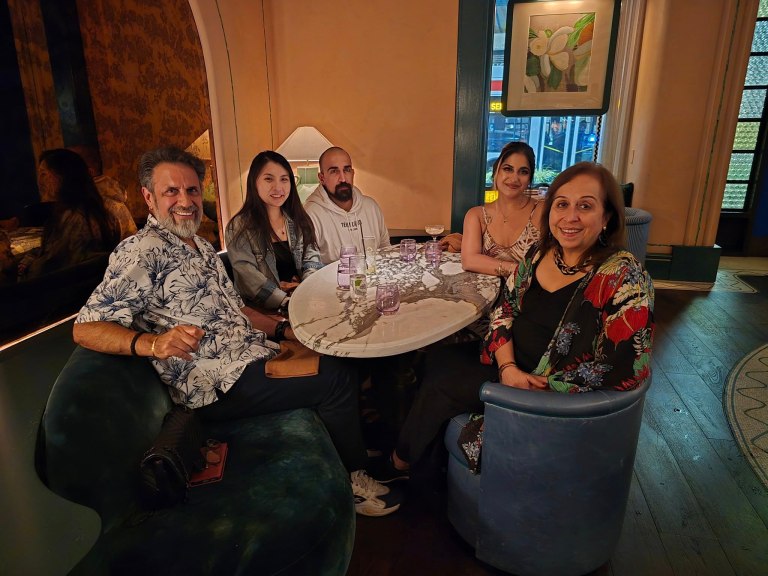
Loosely based on a quote by Durga Chew-Bose
“What tethers me to my parents is the unspoken dialogue we share about how much of my character is built on the connection I feel to the world they were raised in but that I’ve only experienced through photos, visits, food. It’s not mine and yet, I get it. First-generation kids, I’ve always thought, are the personification of déjà vu.”
― Durga Chew-Bose, Too Much and Not the Mood: Essays
It’s been a while since my first post about immigration issues here in the United States, and I mentioned then that there was a chance I’d have more to say. And here it is, because I’m not quite finished. In that bit of time, not much has changed for the better, although I’m not sure what I was expecting. We are still fighting off illegal ICE raids amidst the constant news of unjust and unlawful deportations, putting lives at risk in the name of racism, fascism, and MAGA (which is synonymous with the two preceding nouns at this point.) We’ve made a martyr out of a man who would have loved to see half of us gone. And now talk show hosts are getting pulled after decades on TV because of jokes! Everything is going swimmingly.
You may be wondering, why the hell does this girl care so much? Wasn’t she born in Maryland? Well, besides the fact that all of this is a load of horse shit that is endangering people all over the country, I am also a proud child of immigrants, something I’ve spoken about a lot on Spice. Despite everything happening and the amount of stress the United States brings to my parents, they reminisce about how much they loved this country when they first came here. I often forget that because they are so progressive and revolutionary, there was a time when America represented a dream for them. It was the promised land, full of hope for new opportunities. It didn’t matter that they wouldn’t look like everyone because it was the melting pot. They came here because they knew it would be a better life, and even though they knew the transition would be hard, it would be worth it.
My parents recently told me about how stressful the immigration process was. Because they are naturalized citizens who came here decades ago, I never really thought about their journey here. I knew it was long and drawn out, and probably tedious and expensive. But I didn’t realize that even though they came here through the green card process or, ‘the right way‘, as so many like to say, that they would still endure a terrifying transition. Now imagine that fear for someone who is coming here illegally or as a refugee, hoping for a better life for their families, or those who are going through this isolation and are separated from their loved ones. That sounds mortifying.
This post is a gesture of appreciation and gratitude to my parents, who made great sacrifices to come here. So many of my friends’ parents are in similar situations, feeling torn because the country they once loved is being destroyed before their very eyes. They are feeling the heartache of thinking they made the right choices for their children, but are thinking twice when they turn on the news. But we wouldn’t be who we are without that decision to come here, and I’m so thankful for all that my parents gave up to give me the life that I have, despite everything going on in this country. This is to celebrate my parents and others like them and to provide them with a sense of comfort during these trying times.
Busta Rhymes was born to a set of immigrants from Jamaica. In his song, “Been Through the Storm,” he details their move to America, beginning the track with the lines, “my momma and poppa moved to the US as Jamaicans. Struggled to get visas and green cards through immigration.” As we discussed in the last article, people often view immigration as though it’s the simplest snap of a finger. People don’t come or stay in America undocumented just because they’re entitled; it’s often the opposite. The immigration process is long and confusing, and even when you do successfully obtain papers, they can be puzzling to navigate, resulting in conflicts like expirations. He continues on to rap, “though my pop was po’ stayed away from crime and malice, hard living gave him hard hands and callous. As a young’n, peep how much they loved each other’s space, his hard hands rubbin’ against the pretty skin of my mother’s face.” I see so much of my parents in these lines. My parents came to America with nothing but each other. My dad would do whatever it took to get to his job until they could afford a car. 35 plus years later, and while their hardships look different now, their common denominator is still having each other to turn to when things get challenging. Busta continues on to talk about his mother, explaining, “on the other hand, mommy was the type to work two jobs. Never enough money, that’s why I got your whole crew robbed. Got older, developed ways of grippin’ the steel. Barely home for me to see her, or get a good cooked meal.” As Busta tried to create a different life for himself, it took him away from the roots that paved his way. This song demonstrates some of the realities of immigration; even now, with ICE deportations on the rise, my parents tell us to keep our heads down and to stay out of trouble. Now imagine that fear when you are here undocumented, and you’re working hard to build a life for yourself and your family. There is so much to lose and so much at stake, and yet lives are being destroyed like the click of a button. There is a reason immigrants are among the hardest workers.
While Busta was pushed to stray from his parents’ path in hopes of having more in life, Ruby Ibarra mirrored her mother’s actions in her song, “Someday,” which recounts the uncertainties they faced as a family upon immigrating to the US. The Filipino rapper rhymes, “Mama, I know it’s gon’ be fine wherever we go, cause we know, you raised this girl to dream and be a hero. What’s an ego to an eagle? I free flow when I speak though.” My parents truly made me feel like I could have anything in the world if I worked hard, thanks to their immigration to the US. I saw the way they have worked to live a life that is incredibly different from what they came here with. It showed me that I could do anything at all, especially when I have them in my corner. She continues to rap, “my pipe dream’s through a peephole, my skin’s so Filipino. But often times my pride, inside, is fightin’ high tides. The day we broke the ocean was the day I learned to nosedive. Closed eyes, fingerprint ink with the most dye, those times, Mama never blinked, say the oath twice.” As children of immigrants, we’ve been given the opportunity to take risks and try new things, a liberty our parents never had. They had to stay on a single, focused path to build a life from scratch in a new place, so we didn’t have to. We see that again in the song with the lyrics, “at school, reduced lunches while my Mama skip her lunchtime. Nine to five minimum wage, she at the bus line. Here I am, fillin’ a page, waitin’ to bust rhymes. Til I’m nearin’ the day I’m getting cosigned.” My parents sacrificed many of their own desires so that my brother and I could be happy. If it came down to spending their last penny on themselves or us, there was never a question. And yet, my brother and I didn’t have that same stress. We witnessed it more when we were young, yes, but we were able to dream of a life so far beyond that because of the sacrifices they made.
UK rapper Dave demonstrates in his song, “We’re All Alone,” that although growing up as a child of immigrants can be taxing, it can often be a better option than the alternative. He reminisces in his song, rhyming, “I remember when I used to be innocent, ain’t shit changed, I’m a young Black belligerent. Child of an immigrant, lifestyle frivolous. Round here, we keep bad company cah them people pay dividends. What’s the point of bein’ rich when your family ain’t? It’s like flyin’ first class on a crashin’ plane.” In those lines, he demonstrates our desire as children of immigrants to get the things we didn’t have. A lot of us had parents who had to live modestly, earning every penny. It made us want to work hard and live a life of comfort, even if our parents are stuck in that mindset. A collective first-generation dream is to be able to provide for our parents the way that they worked so hard to do for us. He continued on to rap, “I grew up in a two-bed flat, with seven people livin’ with me, you don’t know what I did for myself. My mum’s the one that gave me opportunities, and put me in positions that I couldn’t have pictured myself. We’re from Nugeria, Benin City, Sin City, don’t know what it’s like? Take a trip for yourself. Poverty’s killin’ us, the government’s killin’ us, if they ain’t killin’ us, then we’re killin’ ourselves.” Dave’s contrast of his two experiences depicts the reason for immigration; although he had to share small spaces with his entire family, at least it meant they were alive and well. Poverty was going to find them both in Nigeria and the UK, but at least in the UK, he had the potential to escape it and live a life of so much more.
The irony, however, is the false promise that America is where immigrants should go, when we’ve seen immigrants mistreated for years. American cuisine, American neighborhoods, and American music would not exist without the immigrants who have lent their culture and traditions. And yet, the people with the most American pride are the ones who don’t want to face this. Wyclef touched on this when discussing his own family’s immigration story in “The Shrine.” In his track, he sang, “me and the Mexicans got something in common. We all got problems with immigration. Why you tryna send my parents back to they country? Many people embark from the land of the free.” America was always marketed as the dream; we encouraged immigrants to come here and live the American way, a life that promised prosperity and good fortune. America was sold as the place where others should come for a better life, and yet, no matter how that’s done, many just try to send them back. My parents immigrated here because they were fed the narrative that their lives would be improved in a number of ways; America was meant to feel safe. And yet, we are ripping that safety right under the feet of millions all over the country, compromising their rights and compromising their freedom.
Aside from the financial tribulations that many of our parents endured, they also had to learn to assimilate into a brand-new world. While we claim America has always been a melting pot of cultures, the racism and discrimination we see nowadays are nothing new. Although it may not have continuously been broadcast, it was constantly occurring. Fort Minor created an amazing, historic example with their song, “Kenji.” They introduce the story with, “my father came from Japan in 1905. He was fifteen when he, immigrated from Japan. He, he, he worked until he was able to buy, to actually build a store.” They set the premise of the story, continuing on with, “it was World War II, when this man named Kenji woke up. Ken was not a soldier, he was just a man, with a family who owned a store in L.A.” “They called him immigrant, in Japanese. He’d say he was called ‘issei’, that meant first generation, in the United States when everybody was afraid of the Germans, afraid of the Japs. But most of all, afraid of a homeland attack.” It hurts my stomach to think about any racial comments or remarks my parents may have endured when moving here. I’ve seen others behave with intolerance when interacting with immigrants, and I always see my family reflected in that. Not everyone is tolerant of immigrants or cultural differences or the unknown. When I think about the cruelty I suffered through as a child, I could only imagine the things said to my grown parents. The song continues on to tell the story of Pearl Harbor and how it impacted the experience of being a Japanese immigrant, with “Ken [knowing] what it would lead to, and just like he guessed, the president said, ‘the evil Japanese in our home country would be locked away.'” “They gave Ken a couple of days, to get his whole life packed in two bags/but then they got back to their home, and what they saw made him feel so alone./Written on the walls and the floor, ‘Japs not welcome anymore.'” While my family thankfully never experienced something as horrifying and isolating as concentration camps, we did understand the feeling of being ostracized after 9/11. When Brown people were suddenly the villains and men who adorned their turbans, resembling my grandfather, were suddenly being targeted, we realized we were never seen the same. There’s a reason why my grandfather stopped visiting the United States. We became a place that was intolerant of a plethora of cultures that looked just a little bit like one another, with an array of tan complexions suddenly becoming synonymous with terrorism. And in 2025, 14 years later, the sentiment has only gotten worse.
And even after all that our parents went through, we, as first-generation children, all go through the phase in which we are embarrassed by our culture. Navigating my cultural identity has been a challenging experience. When I was little, other Brown kids would make fun of me for leaning into my culture too much. My brother completely shunned it. Then I learned that when I would go to India, they didn’t even see me as Indian. I was just American to them. In Jin’s “Chinese Food,” he details the feelings he experienced when looking back at his relationship with his background. He begins the song by saying, “take you back to my pops and mom’s grind, they both immigrated to this country as teenagers. You know typical American dream chasers, immigrating blew up like disco/fast forward, ’82 that was when he met my moms, got married and had a baby too. That baby who? That baby’s me – Jin Au-Yeung/picture a young couple trying to get on track. What are the options, a restaurant or laundry mat? So they chose plan A.” My older brother married a Chinese immigrant whose parents also opened a Chinese restaurant when they moved here. For many, the opportunities were far more restricted, being pigeon-holed into work because they were the supply to meet the demand. Jin furthers on to say, “I was at the restaurant every damn day, but I was only twelve, I just wanted to play. When my friends would come, I gave the food away. I know that was bad for business, so I apologize now if it still makes a difference. I guess deep down I just hated the fact I felt trapped, and that was my way of getting you back.” When my sister-in-law talks about her experiences working at the restaurant, she often mentions times when she had to forgo her childhood to help build a life with her parents. As children of immigrants, we usually come up with our parents. As our parents assimilate, we learn and develop with them, learning the ways of the world as they experience a new one. I’m fortunate that my parents gave us the space to be children, but as I’ve grown older, I understand the reasoning behind all the times our parents said no. Jin concludes the song by rapping, “I can’t go back in time and I hate it, but I can tell you that your hard work was appreciated. See to the customer that was just a plate of rice, but to my family that shit can save a life. It’s more than Chinese food, It’s a life story of a Chinese dude.” I wish I could rewind all the times I was ungrateful for the things our parents did for us. For all the times I refused to eat our cultural food or was embarrassed because I didn’t have what the other kids had. My parents were preserving our heritage and roots while also making the most of what they had. And for the little we had, they did a beautiful job of making it go a really long way.
As I’ve gotten older, one of my favorite aspects of life has been reconnecting with my ancestral ties through my parents and their experiences. As my parents get older, they are opening up to me more, sharing the cultural elements that they hold dear and cherish, as well as the ones they wish to dispel and change as we progress. In Year of the Ox’s “A-Zn FOODS,” he outlines his relationship with the white-washing and colonization of his culture as a first-generation, a relationship that can honestly be quite confusing. He raps, “Asian-American aim for the perfect balance. Came to America, say hurray for the parents. Born in the States, but my Grantmother raised be though, before I learned to talk, I learned the hand-water ratio.” When our culture is passed on to us at a young age, that becomes our usual way of life. We never have to question whether it’s the right way or the wrong way, simply because it may be different; it’s just our way. He then raps, “I get mad as fuck when I see our foods getting gentrified for the mass to love. Why they selling kimchi for 30 bucks at the Gastropub? If it don’t stink it ain’t real, don’t mask it up. Think it’s whack if you’re askin’ us. I’m tryna be friendly but then it offends me. Added sauce to my culture to make it more trendy.” As an Indian-American, I’ve seen my culture serve as the inspiration for a million trends. Right now, white girls everywhere are showcasing their Scandinavian scarves, also known as dupattas, which can be purchased for a mere change at a market in India. From our bangles to our bindis to our hair oil, when we do it, it’s gross. And yet, when it’s Americanized, it becomes boho. It truly is a tale as old as time, but I love that my generation is learning to be mad about it. We’re taking to social media. We’re writing about it in songs. We’re angry that the things we were taught are ingrained in us and are deemed as uncool or weird, and when everyone else takes it for themselves, it’s the most iconic thing of the summer. You already took our spices and the likes once; we won’t let you do it again.
As we navigate these uncertain times, I encourage every child and parent who may relate to this article to think of the late, great Nipsey Hussle. In Gambino’s song, “Black Faces,” Nipsey raps, “look, young rich n****, pops was an immigrant. Lifestyle ill legit, but know I own businesses. Started out the trunk, ended up at the dealership. All gold Rollie, Black face no blemishes.” Do not let the atrocities and the ignorant voices tell you that you are less than. Do not let them take away the beauty of what makes you you. Every time my parents think they made the wrong choice by immigrating to America, I think about all that their journey has taught me. I think about the fight, the resilience, the savviness, and the survival skills. I think about their ability to camouflage while simultaneously standing out in their beautiful Brown skin. I think about what it means to be an immigrant, and the pride I get to carry as a child of them. Our voices will be the loudest while they try to silence us, and we will be the ones on top. Without immigrants, America would have crumbled decades ago.

Subscribe below for more dope content straight to your e-mail♥
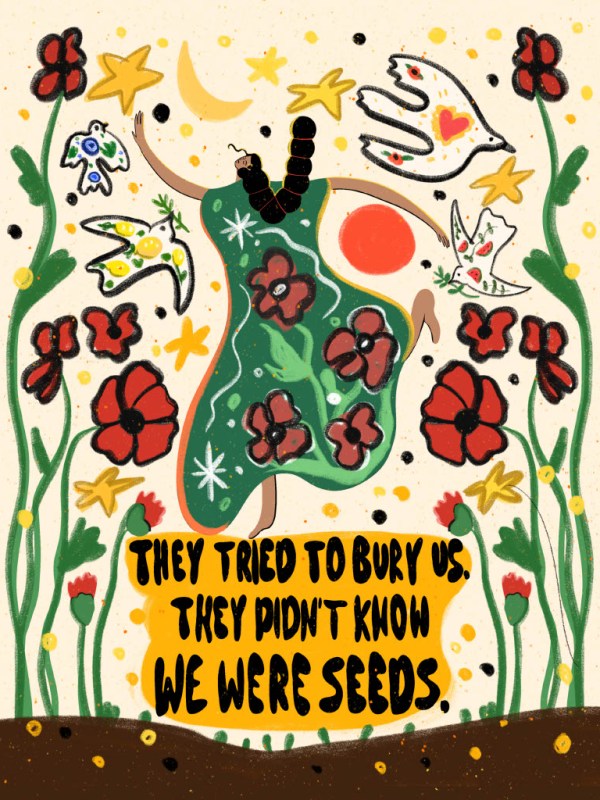
Trump’s Downfall Pt. 2 (Yes, He’s Somehow Still President)
Artwork by the phenomenal @lazybeamarte. You know how they say, New Year, New Me? Well, guess what. It’s a new year, and I’m back to my same antics.…

Book Club: A Conversation With Sophia Chang of ‘The Baddest Bitch in the Room’
Back at the end of June, I had the privilege of interviewing Sophia Chang for Cosmo Baker’s season finale of his Book Club hosted at 48 Record Bar.…
Mango Marketing Co. X Spice on the Beat Playlist
Mango Marketing is a local, Woman-Owned marketing agency serving the cities of Philadelphia and Baltimore. The amazing founders, Natalie Contrera and Alicia Wiley, specialize in growing woman-owned businesses,…
Something went wrong. Please refresh the page and/or try again.
 Spice on the Beat